samedi 20 juin 2026

nmd After I paid off my house, my sister started calling it “our future family home.” A week later, she arrived with boxes—and my parents right behind her. My mom smiled and said, “it’s only fair to share.” I looked at her and calmly said no one was moving into a house I paid for on my own. - News

by


 After I paid off my house, my sister started calling it “our future family home.”

A week later, she arrived with boxes, and my parents were right behind her.

My mother smiled on my front lawn like she had come to bless something instead of take it.

“It’s only fair to share,” she said.

That was the sentence that finally taught me how long I had been mistaken for a resource instead of a daughter.

Three days before everything happened, I sat alone at my kitchen table in Columbus with reheated coffee cooling beside my elbow.

The house was quiet except for the refrigerator humming and the faint tick in the hallway vent.

I had just come home from a hospital shift that left my feet swollen and my shoulders aching under my scrub top.

I opened my banking app because I had been opening it every day for years, even when I already knew exactly what it would say.

Mortgage balance: $0.00.

For a moment, I did not move.

I just stared at those numbers until they blurred, blinked, and came back into focus.

Then I took a screenshot.

Advertisements

At 9:47 p.m., I sent the payoff confirmation to my printer and stood beside it while the cheap paper slid out warm and slightly curled.

Nine years had turned into one sheet of paper.

Nine years of overtime had become a line of black ink.

Nine years of skipped vacations, packed lunches, clearance-rack shoes, and saying “maybe next year” to everything fun had become proof.

The house was not impressive in the way people online use that word.

It was a worn three-bedroom ranch with sticky kitchen cabinets, a squeaky hallway floor, and a backyard that turned into a muddy mess every spring.

The bathroom fan rattled.

The garage door needed a second shove in cold weather.

The porch steps had been patched twice.

But every patch had my hand in it.

Every payment had come from my account.

Every late night I had dragged myself home from the hospital had ended with the same promise.

One day, nobody will be able to move me out of here.

I told my mother on Thursday.

I was standing outside by the mailbox with a paper coffee cup in my hand, still in yesterday’s tired mood even though the morning was bright.

Across the street, a small American flag tapped against someone’s porch rail in the wind.

It felt like the kind of ordinary American morning where good news should have somewhere to land.

“I paid it off,” I said.

There was a pause.

Not a happy pause.

Not the pause people make when they are trying not to cry because they are proud.

It was a measuring pause.

Then my mother said, “Well, Colleen’s rent just went up again. She’s having a hard time.”

I remember looking at the coffee cup in my hand like maybe I had misheard her.

“Mom,” I said, “I just told you I paid off my house.”

“I heard you,” she said. “I’m just saying your sister is struggling.”

There it was.

The family math.

My achievement was never allowed to stand by itself.

It had to be converted into someone else’s need before anyone could congratulate me.

Colleen had always been treated like the weather.

If she made a mess, we adjusted.

If she spent too much, we understood.

If she quit a job, cried about rent, needed a car repair, lost a deposit, or burned through a favor, the family turned toward me like I was the emergency fund with a pulse.

My father rarely said much.

He was not cruel in the loud way.

He was cruel in the quiet way some people become when they let the loud person run the house for thirty years and call that peace.

My mother called it keeping the family close.

I called it being volunteered.

At first, after the payoff, Colleen only hinted.

She texted me that Friday asking whether my spare room still had the old dresser in it.

On Saturday, she asked whether my garage stayed dry when it rained.

On Sunday, she asked what direction the back bedroom faced because she loved “morning light.”

I answered once, then stopped.

By then, something cold had started sitting under my ribs.

At 6:18 p.m. that Saturday, I saw the Pinterest board.

“Our Dream Living Room.”

That was the title.

Not “Ideas.”

Not “Someday.”

Our.

The board had a beige sectional that would have blocked my front window.

There were little baskets for “shared storage.”

There was a pin about making a small home feel open for “blended family living.”

I was not a blended family.

I was one tired woman with a paid-off house and a sister who had apparently decided my walls were available.

I showed Nana Ruth the board two days later.

Nana Ruth was my mother’s mother, but time and truth had made her less loyal to family mythology than to facts.

She lived in a small apartment that smelled like laundry soap and peppermint tea.

When I handed her my phone, she looked at the screen for maybe five seconds.

Then she set it face down on the table.

“Colleen is planning to move into your house,” she said.

I tried to laugh.

“Nana, she makes boards for everything. She had one called Lake House Summer and she’s never owned a kayak.”

Nana Ruth folded one towel, then another.

“Your mother will wrap a demand in a smile and call it love and fairness,” she said. “That does not make it love. That makes it easier for her to say in public.”

I wanted to argue because arguing would have meant I still had hope.

Instead, I drove home and opened my filing cabinet.

Hospital work teaches you something about proof.

People can cry, deny, twist, forget, and perform.

Paper does not care.

So I printed the mortgage payoff confirmation again.

I pulled out the deed copy.

I added my property tax statement, the homeowner’s insurance bill, the loan satisfaction letter, and the final payment receipt.

At 8:03 p.m., I walked through every room and took photos.

The front bedroom.

The guest room.

The kitchen.

The garage.

The porch.

The lawn.

I was not preparing for war.

I was preparing for the version of my mother that would later say nobody meant any harm.

Less than two weeks after the payoff, I came home from a long shift and saw the moving truck.

It was parked directly in front of my house with its hazard lights blinking.

The late afternoon heat shimmered over the pavement.

The diesel engine gave off a low rattle that vibrated through my chest before I even parked.

At first, my mind refused to make sense of it.

Then I saw Colleen’s laundry basket on my front steps.

I saw her taped cardboard boxes stacked on my lawn.

I saw my father carrying a table lamp toward my porch.

My mother stood near the walkway in a neat church dress, holding a foil-covered casserole dish like she had been invited.

Colleen stood beside the truck in leggings and sunglasses, pointing toward my garage as if directing movers into a home she had already claimed.

I sat in my car with my hands on the steering wheel.

The blue folder sat on the passenger seat.

For one second, I did not trust myself.

I imagined getting out and screaming.

I imagined snatching that casserole from my mother’s hands and throwing it onto the grass.

I imagined every neighbor coming to the windows and finally seeing what had been happening in private for years.

Then I breathed in.

I breathed out.

I picked up the folder.

The woman who stepped out of that car was not calm because nothing hurt.

She was calm because something had finally become clear.

Colleen saw me first.

Her mouth opened slightly, then tightened into a smile that was not really a smile.

“Hey,” she said, too brightly. “We were just getting a head start.”

“A head start on what?” I asked.

My father stopped on the porch steps with the lamp held against his chest.

He would not look at me.

That told me he knew.

My mother walked toward me with the casserole.

“Honey,” she said, “don’t make this awkward.”

I looked at the boxes.

I looked at the laundry basket.

I looked at my father holding Colleen’s lamp on the porch I had scrubbed, painted, repaired, and paid for.

“Awkward?” I said.

My mother’s smile became firmer.

“It’s only fair to share. You have all this space, and Colleen needs a place to land.”

“All this space” was three small bedrooms and one bathroom with a faucet that squeaked.

“All this space” was a decade of my life compressed into a mortgage statement.

“All this space” was mine.

Colleen pushed her sunglasses onto her head.

“I don’t understand why you’re acting surprised,” she said. “Mom said she talked to you.”

My mother gave her a look so quick most people would have missed it.

I did not.

“No,” I said. “Mom mentioned your rent. Nobody asked me if you could move in.”

Colleen rolled her eyes.

“Because you would have made it a whole thing.”

A box shifted in the truck.

The driver looked between us and pretended to check his clipboard.

Across the street, a neighbor slowed near his mailbox and suddenly became very interested in an envelope.

Family scenes do not need a courtroom to have witnesses.

Sometimes the whole trial happens on a front lawn while one person holds a casserole and another holds the truth.

My mother lowered her voice.

“Listen to me. Your sister is under a lot of stress. You paid off the house. That means you can afford to help.”

“No,” I said. “It means I can finally breathe.”

She blinked.

I opened the blue folder.

The first page was the payoff confirmation.

I turned it so they could see the balance.

$0.00.

The second page was the deed copy.

The third was the tax statement.

The fourth was the insurance bill.

The fifth was the loan satisfaction letter.

Everything had my name on it.

Only my name.

Colleen crossed her arms.

“Are you seriously doing paperwork at us right now?”

“Yes,” I said.

My father finally looked up.

His face was red, but not with anger.

With shame.

My mother tried to laugh.

“Oh, honey, nobody is saying it isn’t legally yours.”

That sentence told me everything.

She had already separated legal ownership from family ownership in her head.

She had decided the law was a technicality and guilt was the real deed.

“No one is moving into a house I paid for on my own,” I said.

The words were not loud.

They did not need to be.

Colleen’s face changed first.

Shock became offense.

Offense became performance.

“So I’m supposed to be homeless?” she snapped.

“You have an apartment,” I said.

“My rent went up.”

“So did my hours. So did my insurance. So did the cost of everything I gave up to pay this off.”

My mother made a sharp sound.

“That is your sister.”

“I know who she is,” I said. “That’s why I know she should have called me before hiring a moving truck.”

My father set the lamp down slowly.

It made a soft thump on the porch boards.

That tiny sound broke something open.

He looked at Colleen and said, “You told us she agreed.”

Colleen froze.

My mother turned her head.

“What?” I said.

My father swallowed.

“She said you two had talked,” he said. “She said you were nervous about the change but said yes.”

The driver stopped pretending to read his clipboard.

My mother’s casserole dish sagged in her hands.

Colleen’s mouth opened, but nothing came out right away.

Then she said, “I said she would agree.”

That was not the same thing.

Everyone on that lawn knew it.

I reached back into the folder and pulled out the printed screenshot I had found earlier that day after Nana Ruth sent it to me.

Colleen had texted my mother at 7:12 that morning.

Once I’m in, she won’t make me leave. Just keep Dad unloading.

I had printed it because I knew someone would call me dramatic.

I handed it to my father.

He read it once.

Then again.

The color drained from his face in a way I had never seen.

“Colleen,” he whispered. “You planned this?”

Colleen’s eyes filled fast, but I had known my sister too long to mistake tears for remorse every time.

Sometimes tears were just the first tool she grabbed when the old ones stopped working.

“I’m desperate,” she said.

“No,” I said. “You’re caught.”

My mother stepped between us.

“Enough. We are not humiliating your sister in the street.”

I almost laughed.

Not because it was funny.

Because my mother had missed the whole point.

Colleen had brought a moving truck to my house without permission.

My father had carried her lamp onto my porch.

My mother had come with food and a speech about fairness.

But somehow the humiliation only began when I said no.

I took out my phone.

My mother looked at it, and for the first time, real worry moved across her face.

“Who are you calling?” she asked.

“The moving company first,” I said. “Then whoever I need to call if any of those boxes cross my doorway.”

The driver held up both hands.

“Ma’am, we’re not bringing anything in without the homeowner’s permission.”

Homeowner.

The word landed like a hand on my shoulder.

For nine years, I had been payer, helper, daughter, sister, fallback plan, emergency contact, safe option.

For once, someone named me correctly.

My father stepped down from the porch.

He looked smaller without the lamp in his hands.

“I’m sorry,” he said.

My mother turned on him.

“Don’t you start.”

He flinched, and I hated that I recognized it.

That was the same flinch I had learned in childhood.

The one that said it was easier to let her decide than to survive her disappointment.

But this time he kept looking at me.

“I thought you agreed,” he said.

“I didn’t,” I answered.

He nodded once.Then he turned, picked up the lamp, and carried it back to the truck.

Colleen made a strangled sound.

“Dad!”

He did not stop.

That was when my mother finally lost the smile completely.

“You are tearing this family apart,” she said to me.

I looked at her standing on my lawn with a casserole meant to make a theft look domestic.

“No,” I said. “I’m locking my door.”

The moving truck left forty minutes later.

Not quickly.

Not cleanly.

Colleen cried, cursed, and accused me of making her look like a criminal.

My mother told me I would regret being so cold.

My father loaded in silence.

The driver kept his eyes down and moved fast.

When the last box was off my grass, I walked every room again and checked every window.

Then I changed the lock code on the garage keypad.

I texted my mother one sentence.

Do not come to my house without being invited.

She replied six minutes later.

After all we’ve done for you.

I almost answered.

I almost listed the years I had paid bills, covered repairs, bought groceries, loaned money that never returned, and swallowed every family meeting that ended with me giving something up.

But I was tired of presenting evidence to people who had already decided my life belonged to them.

So I did not write back.

Nana Ruth called that night.

I do not know who told her first.

Maybe my father.

Maybe the neighborhood gossip network that works faster than the internet.

She did not ask if I was okay in the soft, worried voice people use when they want you to fall apart.

She asked, “Did you hold the door?”

“Yes,” I said.

“Good,” she said. “Now keep holding it.”

The next week was ugly.

My mother called me selfish in the family group chat.

Colleen posted vague quotes about people who forget where they came from.

A cousin I barely knew messaged me that family should help family.

I sent none of them the folder.

I sent none of them the screenshot.

People who wanted the truth could ask for it.

People who wanted a villain already had one.

On Friday afternoon, my father came by alone.

He stood on the porch with both hands visible and did not try the door.

That mattered more than I expected.

When I opened it, he looked older than he had the week before.

“I brought your spare key back,” he said.

I had forgotten he even had one.

He held it out on his palm.

For a second, I saw all the years he had stayed quiet.

All the dinners where my mother volunteered me.

All the times he looked down instead of helping.

An apology does not erase a pattern.

But sometimes it names one.

“I should have asked you myself,” he said.

“Yes,” I said.

He nodded.

“I’m sorry.”

I took the key.

I did not invite him in.

That was new for both of us.

A month later, Colleen found another place with a roommate.

My mother did not speak to me for three weeks, which turned out to be quieter than I expected and less painful than I feared.

When she finally called, she started with, “I hope you’re happy.”

I looked around my kitchen.

The cabinets still stuck.

The floor still creaked.

There was a laundry basket of clean towels on the chair and a grocery bag on the counter I had not unpacked yet.

The house was ordinary.

It was imperfect.

It was peaceful.

“I’m getting there,” I said.

She hung up.

I set the phone down and stood in the middle of the kitchen where the old printer had spit out that payoff letter.

For most of my life, I thought being a good daughter meant keeping the family comfortable, even if I was the one who had to shrink.

I thought being a good sister meant opening my hand every time Colleen opened hers.

I thought peace meant letting my mother tell the story.

But peace that requires your surrender is not peace.

It is just a quiet room where everybody knows who is being used.

That night, I put the blue folder in the top drawer of my desk.

Then I locked the front door, checked the porch light, and made myself dinner.

No casserole.

No audience.

No boxes on my lawn.

Just me in the house I had paid for, breathing like someone who finally understood that love does not need a spare key to be real.

And for the first time since I saw that mortgage balance hit zero, I let myself feel it.

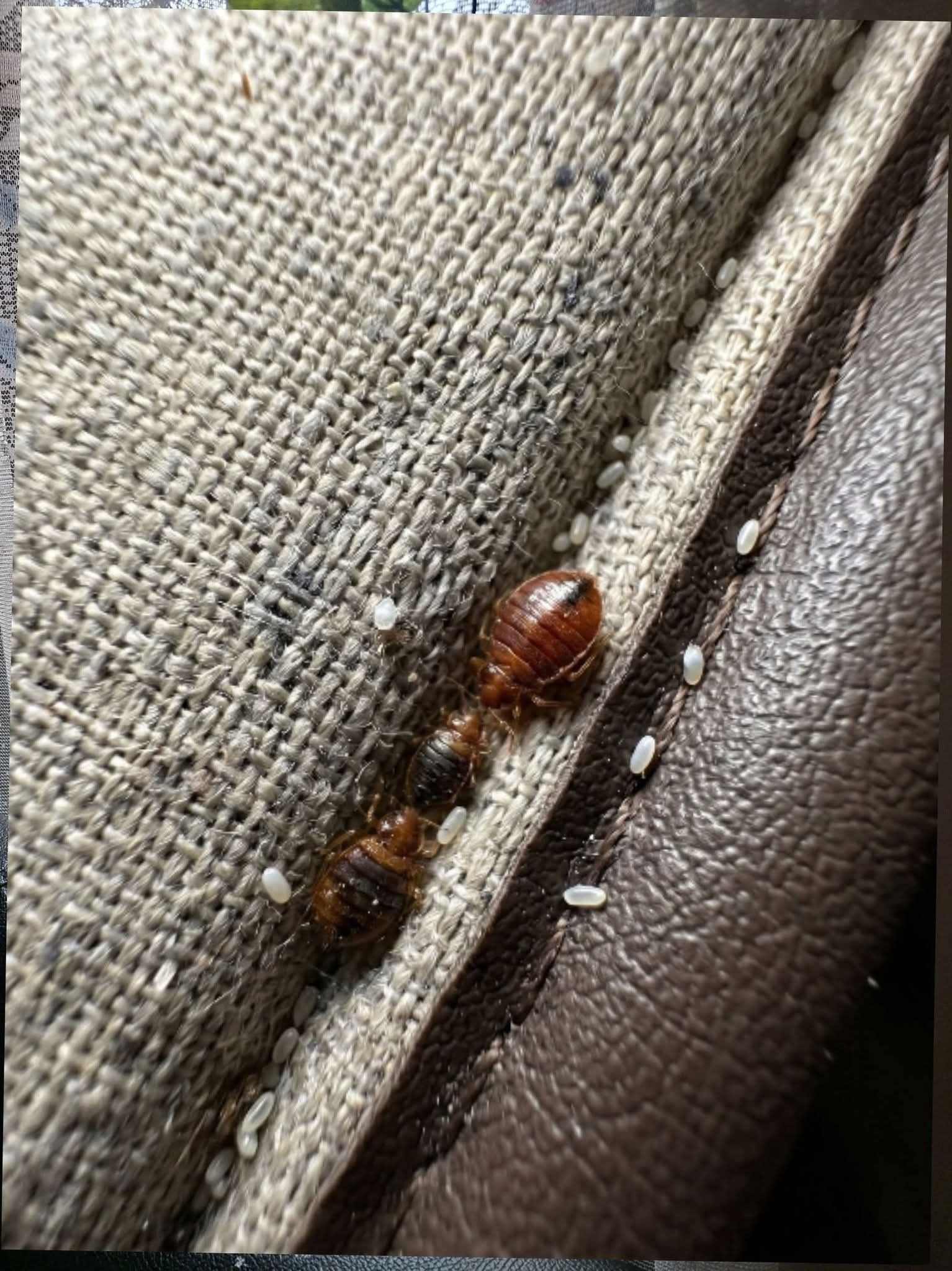
I discovered this hidden in a crack in my sofa… please don’t tell me these are bed bugs.

by


 You discover a small, dark object on your sofa and start to worry? Don't panic: these finds are common and, in most cases, completely harmless.

You lift a cushion, a simple, almost automatic gesture… and there it is: a small, dark object, wedged in a crack. Your heart races, your imagination runs wild. What if it's something worrisome? Before you panic, know that these discoveries are much more common—and reassuring—than you might think. Behind these "sofa mysteries" often lie surprisingly simple explanations…

Strange object on the sofa: why do we imagine the worst?

When faced with an unusual shape, our brain tends to overreact. It's an instinctive reflex: anything out of the ordinary triggers an internal alarm.
Irregular, dark, or segmented shapes unconsciously remind us of natural elements we prefer to avoid. As a result, even a simple residue can seem suspicious. Add to that the fact that our home is perceived as a clean and secure haven, and the slightest "intruder" quickly becomes a source of worry.

But in the vast majority of cases, there's no reason to panic.

The Most Common Guilty Plots
Before imagining the worst-case scenario, it's best to consider the most likely—and often the most mundane—options.

First suspect: false eyelashes. When they come loose and mix with dust and mascara, they can form a small, dark, irregular mass. Tucked into a corner, they become unrecognizable.

Another possibility: cosmetic residue. Waterproof makeup, in particular, has the ability to clump together with fibers and harden, creating surprising shapes.

We also think of small plant elements: a piece of dried bark, a bit of potpourri residue, or a crumb from a natural product. With moisture and then drying, their appearance can change completely.

Finally, forgotten everyday objects—a piece of plastic, a fragment of a pet toy, or an old adhesive residue—can also evolve over time.

When objects “transform” at home
What’s fascinating is that our environment is constantly evolving, even without us realizing it.

Between humidity, heat, and wear and tear, some materials change their appearance. A simple residue can become crumbly, deform, or accumulate dust, eventually taking on an almost “organic” look.

It’s a form of domestic transformation: nothing really moves, but everything evolves slowly.

How to check without panicking? Good news: there are a few simple steps to quickly identify what you've found.

Start by observing it in natural light. Reflections, texture, or transparency often provide valuable clues.
Add a drop of water: if the object softens or releases color, it's probably product residue.

You can also rely on the smell. A cosmetic or lightly perfumed scent is generally a good sign.

Finally, observe the surroundings: a similar object or a complementary trace is often nearby.

Common sense above all.
Our grandmothers had a simple and effective approach. Their rule? Don't complicate what can be obvious.

A stationary object, without any change, is almost always harmless. Before imagining a thousand hypotheses, it's best to examine it calmly... then take simple action.

A cloth, a little water, and the mystery quickly disappears.

And what if we stopped scaring ourselves?
These little discoveries are part of everyday life. They simply tell the story of our home: a mix of products, objects, and lived moments.

Rather than seeing them as a threat, why not consider them a reminder that a home is a living space?

The next time you come across a strange object on the sofa, take a breath… and observe it with curiosity rather than concern.

Sometimes, the mystery is just a forgotten detail waiting to be cleaned. A good sofa cleaning routine is often enough to avoid these surprises.

FBI Provides Updates On Mysterious Deaths of Scientists

by


 Reports of multiple scientists connected to U.S. aerospace and defense programs who have died or gone missing since 2022 have drawn new attention following action by congressional investigators, though authorities have not confirmed any link between the cases. The House Oversight Committee on Monday requested information from several federal agencies regarding the deaths and disappearances of at least 11 researchers with ties to organizations such as NASA and private companies including SpaceX and Blue Origin. Committee Chairman James Comer and Rep. Eric Burlison sent letters to Kash Patel, Energy Secretary Chris Wright, Defense Secretary Pete Hegseth, and NASA Administrator Jared Isaacman, requesting staff-level briefings by April 27, Fortune magazine reported.

On Monday, Comer, a Kentucky Republican, said he did not believe the deaths were a coincidence. “Once you see the facts, it would suggest that something sinister could be happening and it would be a national security concern,” Comer said. He added he and Burlison were looking to “see if wecan put it together and find any missing links to try to solve what’s going on here. Because it’s very unlikely that this is a coincidence. Congress is very concerned about this. Our committee is making this one of our priorities now because we view this as a national security threat.”

Later that day, President Trump told reporters, “I don’t know. Hopefully,coincidence, whatever you want to call it. But some of them were very important people,” adding he would have answers within “the next week and a half.” He added: “I just left a meeting on that subject, so pretty serious stuff.”

NASA referred Fortune to its first statement on the matter, which was posted to the X platform: “NASA is coordinating and cooperating with the relevant agencies in relation to the missing scientists. At this time, nothing related to NASA indicates a national security threat. The agency is committed to transparency and will provide more information as able.”

Focus On Space and Defense Sector Expands

NASA is coordinating and cooperating with the relevant agencies in relation to the missing scientists. At this time, nothing related to NASA indicates a national security threat. The agency is committed to transparency and will provide more information as able. https://t.co/92dTXGAxQn – Bethany Stevens (@NASASpox) April 20, 2026

The Oversight Committee’s inquiry has focused in part on connections to NASA and nuclear research programs, but its focus is on the broader commercial space and defense sector in which many of the individuals worked. Experts note that fields such as planetary defense and nuclear research are relatively small, with a limited number of specialists focused on areas like asteroid tracking, deflection modeling, and space-based detection systems. In March 2026, Blue Origin introduced its NEO Hunter concept, a planetary defense initiative developed in collaboration with Jet Propulsion Laboratory and California Institute of Technology.


Reports Concerning Donald Trump’s Health Gain Attention Following Schedule Changes

by

The situation began when social media users started sharing posts suggesting that Donald Trump had been admitted to Walter Reed National Military Medical Center. These claims were not verified at the time, yet they quickly gained traction. Platforms such as X (formerly Twitter), Facebook, and various online forums saw a rapid increase in posts discussing the alleged development. In many cases, the information was shared without supporting evidence, demonstrating how quickly speculation can spread when it involves a widely recognized public figure. As more users engaged with the topic, the narrative evolved, with some posts presenting the claims as fact despite the lack of official confirmation. This created confusion among audiences and contributed to growing concern among supporters and observers alike.

The initial trigger for the rumors appears to have been a change in the former president’s public schedule. An announcement indicated that Donald Trump would not attend certain events planned for April 4. Given his reputation for maintaining ahighly active public presence, the cancellation immediately drew attention. Observers noted that deviations from routine schedules often prompt questions, especially when they are not accompanied by detailed explanations. In the absence of immediate clarification, some individuals began to speculate about possible reasons behind the change. This gapin information created an environment where assumptions could flourish, ultimately leading to the spread of unverified claims.

One of the most significant aspects of this situation is how social media platforms contributed to the rapid dissemination of information. Algorithms designed to prioritize engaging content can sometimes amplify posts that evokestrong reactions, regardless of their accuracy. In this case, posts suggesting a medical emergency involving Donald Trump generated considerable attention. As these posts were shared and reshared, they reached a wider audience, increasing their visibility. This pattern is not unique. Similar situations have occurred in the past when rumors about publicfigures gained momentum online before being addressed by official sources. The speed at which information travels today means that even unverified claims can achieve significant reach in a short period of time.

Official Response and Clarification

As speculation intensified, official representatives issued statements to address the situation. According to these statements, the reports suggesting hospitalization at Walter Reed National Military Medical Center were inaccurate. Officials clarified that Donald Trump remained at his residence and continued to carry out his usual responsibilities. They also emphasized that there had been no medical emergency. The response aimed to reassure the public and to these statements, the reports suggesting hospitalization at Walter Reed National Military Medical Center were inaccurate. Officials clarified that Donald Trump remained at his residence and continued to carry out his usual responsibilities. They also emphasized that there had been no medical emergency. The response aimed to reassure the public and correct misinformation that had begun circulating online. By providing a clear and direct statement, authorities sought to bring clarity to the situation and reduce the spread of unfounded claims.

Public interest in the health of prominent leaders is not new. Over the years, various updates have been shared regarding the health status of Donald Trump

 At one point, it was disclosed that he had been diagnosed with chronic venous insufficiency. This condition involves the improper functioning of vein valves in the legs, which can affect blood circulation. Medical professionals generally consider this condition to be relatively common, particularly among older adults. It is typically manageable with lifestyle adjustments, monitoring, and standard medical care. Importantly, no recent updates have indicated any significant change in his health status. Officials have not suggested that this condition played any role in the recent speculation.

The public response to the situation varied widely. Some individuals expressed genuine concern, while othersapproached the claims with skepticism. Many users called for patience and urged others to wait for confirmed information before drawing conclusions. This range of reactions reflects the broader dynamics of online discourse. When information is incomplete or unclear, people often fill in the gaps with their own interpretations, which ca from one person to another. Fact-checking organizations and reputable news outlets also played an important role during this period. They worked to verify claims and provide accurate updates, reminding audiences of the importance of relying on credible sources.

The Importance of Verified Information

verified information. In an era where anyone can share content online, distinguishing between reliable and unreliable sources has become increasingly important. Health-related claims, in particular, require careful handling. Misinformation in this area can lead to unnecessary concern or confusion. For public figures, such rumors can also have broader implications, influencing public perception and media narratives. By waiting for official statements and consulting trustworthy sources, individuals can help reduce the spread of misinformation and contribute to a more informed public conversation.

It is not uncommon for schedule changes involving high-profile individuals to generate interest. Public continue reading …figures often operate under tightly organized calendars, and any deviation can raise questions. In the case of Donald Trump, his active public presence has led many to associate consistency with stability. As a result, unexpected changes can prompt speculation, even when there is no underlying issue. This phenomenon underscores the close relationship

BREAKING: He Just Quit - President Trump Accepts Resignation After...See more

by


 A federal judge appointed by former President Ronald Reagan announced that he has resigned from the bench. Advertisement Wolf wrote that he was giving up his lifetime appointment so he can speak openly against President Donald Trump, whom he accuses of undermining judicial independence and using the law to reward allies and target opponents. “My reasonis simple: I no longer can bear to be restrained by what judges can say publicly or do outside the courtroom. President Donald Trump is using the law for partisan purposes, targeting his adversaries while sparing his friends and donors from investigation, prosecution, and possible punishment,” he wrote. “This is contrary to everything that I have stoodfor in my more than 50 years in the Department of Justice and on the bench. The White House’s assault on the rule of law is so deeply disturbing to me that I feel compelled to speak out. Silence, for me, is now intolerable,” he added.

The former U. S. District Court judge for the District of Massachusetts noted that he began his public service careerat the Department of Justice in 1974, not long after the Watergate scandal that brought down then-GOP President Richard Nixon. Wolf served under Attorney General Edward Levi during the Ford administration, crediting Levi with shaping his understanding of the rule of law and the importance of pursuing justice in a nonpartisan manner. Wolf‘s successorwas chosen and nominated after he assumed senior status in 2013, and the seat was formally filled by Judge Indira Talwani, an Obama appointee, in 2014.

Judge Speaks Against Trump Administration

“I hope to be a spokesperson for embattled judges who, consistent with the code of conduct, feel they cannot speak candidly to the American people,” he told The New York Times. White House spokeswoman Abigail Jackson countered Wolf‘s commentary in a statement to Fox News Digital, noting that judges who “want to inject their own personal agenda into the law have no place on the bench. ” “And any other radical judges that want to complain to the press should at least have the decency to resign before doing so” she added.

This comes just months before November’s midterms. Speaking on Breitbart, Gruters argued Republicans are entering the midterm cycle with significantly stronger financial positioning and unprecedented coordination across the conservative movement. Host Mike Slater asked Gruters to put the reported $70 million Democrats spent in Virginia’s 

recent redistricting battle into perspective. Gruters responded by painting a bleak financial picture for Democrats.

Republicans’ Financial Advantage in Midterms

“The DNC has minus 4 million [dollars], and it wasn’t the DNC that plowed $70 million: It was the collective,” Gruters said. “The collective on the left may have $350 million, and when you havethe court, there’s gonna be a court case that is ruled on in the next week or two, coordinated campaign limits, which will magnify that, which will allow full coordination and allow the parties to spend at the candidate rate, which is massive for us,” he said. Gruters said the financial landscape could mark a historic break from previous election cycles

Which Woman Looks Oldest …This Personality Test Claims to Reveal Your True Character

by

Personality tests based on first impressions have become incredibly popular online because they tap into something fascinating: the way our brains make quick judgments without us even realizing it.

This image asks a simple question: Which woman looks the oldest to you?
Your answer may reflect how you view people, relationships, confidence, and even yourself.

Take a quick look at the four silhouettes. Don’t overthink it. Choose the woman who appears oldest to you, then scroll down to see what your choice may say about your personality.

WOMAN #1

If you chose Woman #1, you are likely someone who values elegance, stability, and emotional balance.

You tend to notice posture, calm behavior, and composure before anything else. People may see you as mature, dependable, and thoughtful. You usually avoid unnecessary drama and prefer peaceful environments over chaos.

You are also highly observant. Even when you stay quiet, you notice details others miss. Friends often come to you for advice because you give practical and balanced opinions.

At times, however, you may carry more responsibility than you should. You often try to appear strong even when you are exhausted inside.

WOMAN #2

If Woman #2 looked oldest to you, you may have a bold and independent personality.

You are energetic, driven, and constantly thinking about your next goal. You admire ambition and confidence, but you also tend to judge people quickly based on attitude or body language.

You are not afraid to speak your mind, even when others disagree. Many people see you as fearless, though deep down you sometimes worry about being misunderstood.

Your greatest strength is resilience. No matter how difficult life becomes, you keep moving forward.


WOMAN #3

If you selected Woman #3, you are likely creative, emotionally intelligent, and highly intuitive.

You often rely on feelings more than logic when making decisions. You can sense tension in a room almost instantly and usually understand people’s emotions before they say a word.

You appreciate deep conversations and meaningful relationships. Superficial people drain your energy.

However, your sensitivity can also become your weakness. You may overthink situations or replay conversations in your mind long after they end.

Still, your empathy makes you someone others trust deeply.

WOMAN #4

If Woman #4 appeared oldest to you, you probably have a practical and realistic mindset.

You value honesty over appearances and prefer facts over fantasy. You are careful with your decisions and rarely let emotions completely control you.

People may see you as reserved at first, but once someone earns your trust, you become incredibly loyal and protective.

You are also highly independent. You dislike relying on others and prefer solving problems on your own.

Sometimes you can appear emotionally distant, but in reality, you simply guard your feelings carefully

WHAT DOES THIS REALLY MEAN?

While tests like this are fun and entertaining, they are not scientifically proven personality evaluations. Your choice is influenced by personal experiences, perception, culture, and even your mood at the moment.

Still, these kinds of visual tests are interesting because they reveal how differently people see the exact same image.

So… which woman did YOU choose?